How to Choose Grooming Tools for Your Pet
By chibitail. This guide is general information, not veterinary advice.
Home grooming saves money and trips to the salon, but a drawer full of the wrong tools is no help. Start from your pet's coat and the jobs you actually want to do, then buy the smallest set of tools that covers them.
Start with the coat
- Short, smooth coats (Beagle, Labrador, most short-haired cats): a rubber brush or grooming glove, nail tools, and that is usually it. Clippers are rarely needed.
- Double coats (Husky, Shiba, German Shepherd): an undercoat rake and slicker brush. Do not shave a double coat short unless your vet or groomer recommends it; the coat protects from heat and sun.
- Long or curly coats that keep growing (Poodle, Shih Tzu, Maltese, doodles): these need regular clipping, plus a comb to check for knots, and a small trimmer for face and paws.
- Long-haired cats: a wide-toothed comb for daily knots, and sometimes a small trimmer for the hair around the bottom and between the paw pads.
The basic kit
- A brush or comb for your coat type.
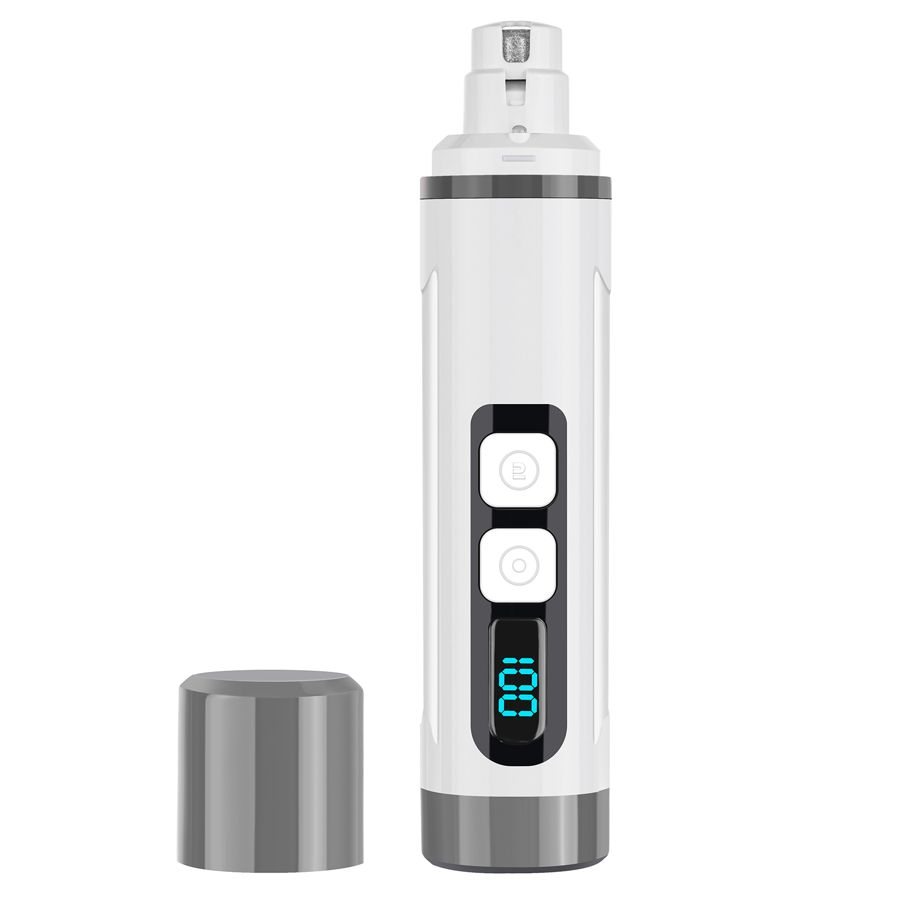
- Nail tools: clippers, a grinder, or both. See our nail care guide.
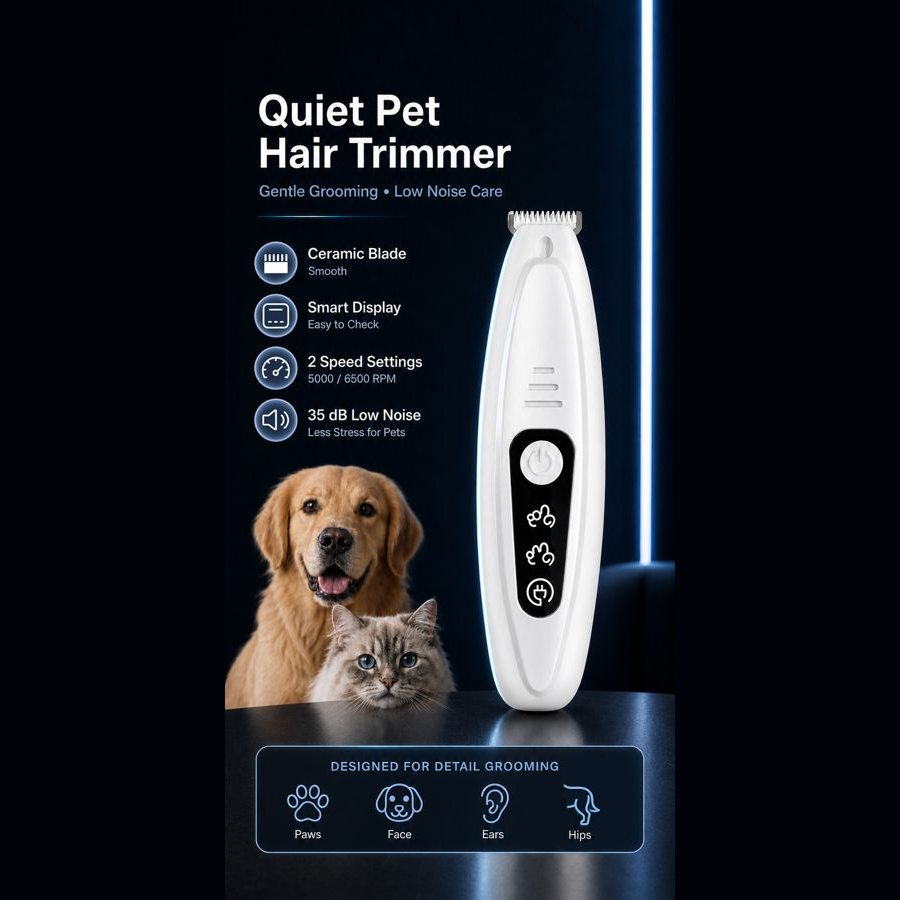
- A small paw trimmer if hair grows between the pads. Long pad hair makes dogs slip on hard floors.
- Clippers only if the coat keeps growing and you want to keep it short between salon visits.
What to look for in clippers
- Blade width. A wide blade (around 3.5 to 4 cm) is quick on the body. A narrow one (around 2 cm) is for paws, face and ears. Kits with interchangeable heads cover both.
- Blade material. Ceramic blades stay cooler than steel during long sessions. Steel blades are durable. Many clippers combine a ceramic moving blade with a steel fixed blade.
- Noise and vibration. Nervous pets do better with quiet clippers. Let your pet hear the clipper from a distance before the first session.
- Cordless and battery life. A cordless clipper is easier to use on a pet who moves around. Look for enough runtime to finish a full groom, or a model that works while charging.
- Washable. Clippers that can be rinsed are much easier to keep clean. Check the water rating and what it covers: a splash-proof rating is not the same as fully waterproof.
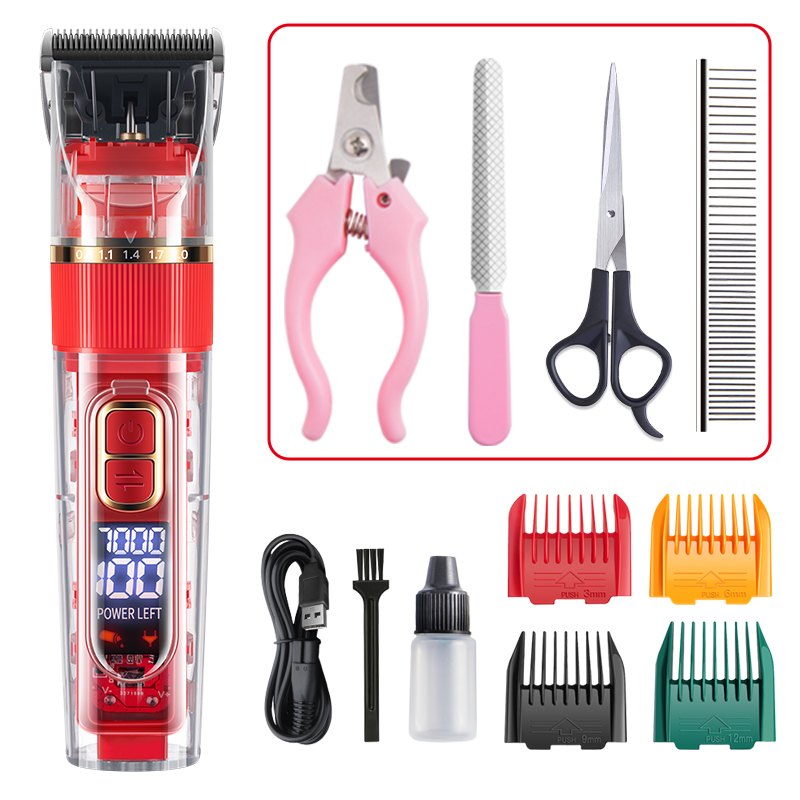
- Guide combs. Clip-on combs set the length you leave. Beginners should always start with a longer comb.
One tool or several?
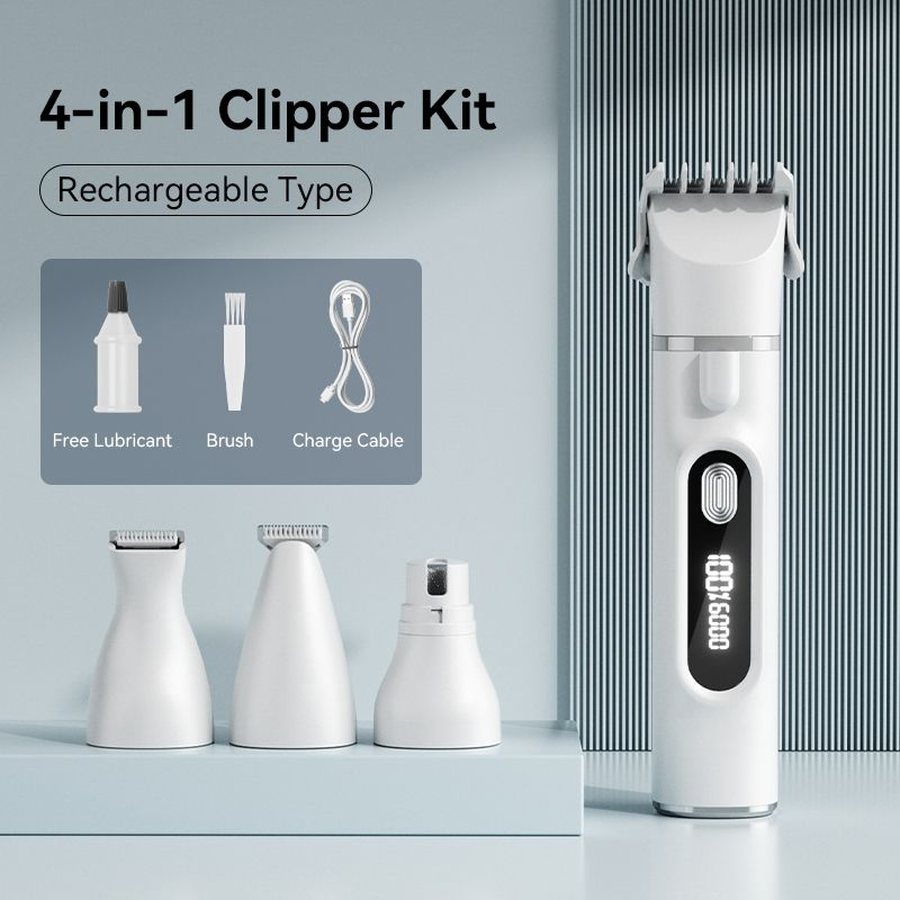
Multi-head kits like our 4-in-1 Grooming Set put a body clipper, a detail trimmer, a curved head and a nail grinder on one handle. They save space and money if you need all four jobs. If your pet only needs paw and face tidying, a single small trimmer such as the Mini Paw Trimmer is simpler. For full clips on a bigger dog, a dedicated clipper with guide combs, like the Washable Clipper Kit, is the better choice.
Safety basics
- Brush out knots before clipping; clippers pull on matted hair.
- Keep the blade flat against the skin and move with the direction of hair growth until you are confident.
- Check the blade temperature on the inside of your wrist every few minutes.
- Go slowly around ears, eyes, armpits and the belly, where skin is thin and folds.
- Short sessions with treats. A tidy paw today and a tidy face tomorrow is fine.
- Badly matted coats, skin problems or a pet that panics are jobs for a professional groomer or your vet.
Looking after your tools
Brush hair out of blades after each use, rinse washable heads, dry them, and oil clipper blades as the manual says. Replace grinder drums and blades when they stop cutting cleanly: a blunt blade pulls hair.