A Beginner's Guide to Dog Nail Care
By chibitail. This guide is general information, not veterinary advice.
Long nails are easy to miss. You notice them when your dog clicks across a wooden floor, slips on tiles, or catches a claw on the sofa. Overgrown nails change the way a dog stands and walks, and very long ones can curl and split. The good news: nail care at home is a skill you can learn in a few weeks, and most dogs learn to accept it.
How often should you trim?
There is no single schedule. Dogs that walk a lot on pavement wear their nails down; dogs that live on carpet and grass do not. A simple test: when your dog stands still on a hard floor, the nails should not touch the ground. If you hear clicking, it is time.
For many dogs that means a little work every two to four weeks. Short, frequent sessions are better than one big trim, because the quick (see below) moves back a little each time the nail is kept short.
Know the quick
Inside each nail is the quick: a living core with blood vessels and nerves. Cutting into it hurts and bleeds, and one bad experience can make a dog wary of nail care for months.
- Light nails: you can usually see the quick as a pink area inside the nail. Stay a few millimetres in front of it.
- Dark nails: you cannot see it from outside. Take off thin layers and look at the cut surface. When a small dark dot appears in the centre, stop: the quick is close.
- Dewclaws: the nails higher up on the inside of the leg never touch the ground, so they grow long fastest. Check them every time.
Clippers or a grinder?
Both work. The best tool is the one you and your dog are comfortable with.
- Clippers are quick and silent. They take off a piece in one cut, which is efficient but easier to overdo, and blunt clippers can squeeze the nail.
- Grinders file the nail down a little at a time. It takes longer, but you have more control near the quick and the edge ends up smooth instead of sharp. The downside is noise and vibration, which some dogs need time to accept.
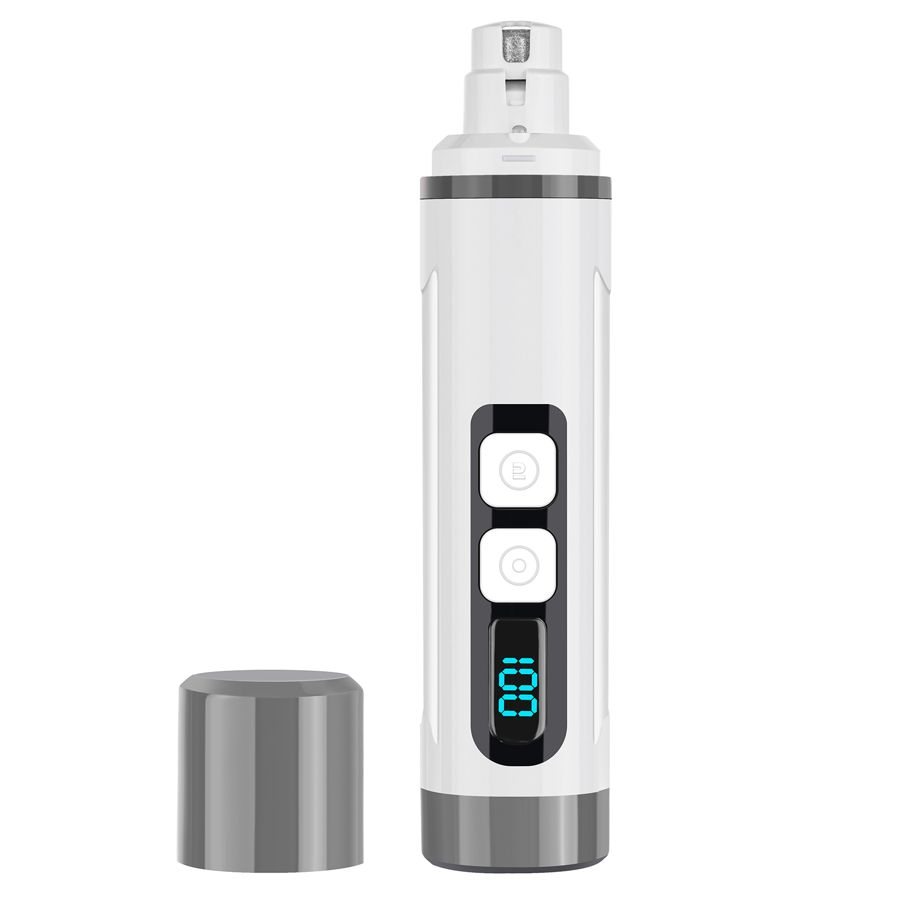
Many owners use both: clippers for the bulk, a grinder to finish and smooth. A grinder with a light, like our LED Nail Grinder, helps you see the quick on light nails.
Get your dog used to it first
Most dogs that hate nail trims were never taught what to expect. Spend a week on these steps before you trim anything. Keep each session to a minute or two and end with a treat.
- Touch your dog's paws during calm moments on the sofa. Reward.
- Hold a paw for a second, then two, then five. Reward each time.
- Show the clippers or grinder. Let your dog sniff it while it is off. Reward.
- Switch the grinder on across the room, then closer. Reward calm behaviour.
- Touch the grinder (switched off) to one nail. Reward. Then switched on, for one second.
If your dog pulls away, go back a step. There is no deadline.
Trimming with a grinder, step by step
- Pick a quiet time, after a walk when your dog is tired. Good light helps.
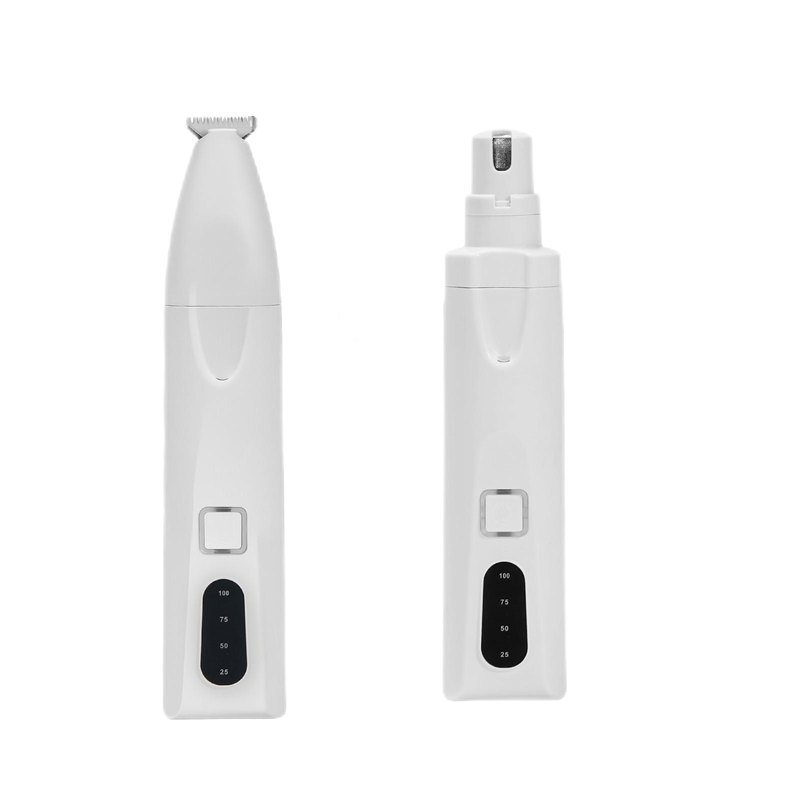
- Keep long hair out of the way. Hair can wrap around a spinning drum. Hold it back, or trim the hair between the pads first with a small paw trimmer.
- Hold the paw firmly but gently and press lightly on the pad to extend the nail.
- Touch the drum to the nail for one or two seconds, then lift it. Grinding for longer heats the nail.
- Work from underneath and the tip, rounding the edge. Take a little, look, take a little more.
- Stop before the quick. On light nails, stay in front of the pink. On dark nails, stop at the dark dot.
- Reward after every nail or two. You do not have to finish all four paws in one go.
If you cut the quick
It happens to everyone eventually. Stay calm, press a clean cloth on the nail and apply styptic powder if you have it; a little cornflour also helps. Bleeding usually stops within a few minutes. Give your dog a break and a treat, and do the next session shorter. If the bleeding does not stop, or the nail is cracked deep into the toe, call your vet.
When to ask a professional
See a vet or groomer if a nail has grown into the pad, if a nail is split or infected, if your dog is in pain when you touch the paw, or if your dog is so stressed that you cannot hold a paw safely. A groomer can also show you where to stop on your dog's nails.
A short checklist
- Nails should not touch a hard floor when your dog stands.
- Little and often, every two to four weeks.
- Thin layers, one or two seconds per touch with a grinder.
- Check the dewclaws.
- Treats, patience, and stop before your dog has had enough.