How to Keep an Indoor Cat Entertained: 12 Easy Ideas
By chibitail. This guide is general information, not veterinary advice.
Indoor cats are safer from traffic, fights and disease, but they still have the body and brain of a hunter. A bored cat often finds its own entertainment: zoomies at 3 am, knocking things off shelves, ambushing ankles or pestering you for food. The fix is not a pile of toys. It is a few minutes of the right kind of play every day and a home with things to climb, watch and explore.
1. Play like a hunt
Move a wand toy like prey, not like a flag. Let it hide behind a chair, freeze, then dart away. Drag it across the floor, away from your cat, never straight at their face. At the end, let your cat catch it properly. A hunt that never ends in a catch is frustrating.
2. Two short sessions a day
Most cats are most active around dawn and dusk. Five to fifteen minutes of play in the morning and in the evening is enough for many adult cats. Young cats and kittens often want more. Stop while your cat is still interested.
3. Play, then food
In nature a hunt ends with a meal. Many owners find that play followed by dinner or a small treat helps a cat settle and sleep, especially if evening play is right before bedtime.
4. Make food a puzzle
Put part of the daily dry food in a puzzle feeder, a food ball or a few paper cups around the room. Start easy so your cat succeeds, then make it harder. Count these pieces as part of the daily ration, not extra.
5. A window seat
Watching birds and people is entertainment for hours. A shelf or a cat bed on a windowsill helps, and a bird feeder outside the window makes it even better. Check that the window has a secure screen.
6. Somewhere to climb
Cats feel safer and more confident up high. A cat tree, wall shelves or a cleared top of a bookcase gives your cat a lookout and more space in the same flat.
7. Scratching in the right places
Scratching is normal and keeps claws in shape. Offer a tall, stable post covered in sisal, and put it where your cat already scratches: near the sofa, the bed or the front door. A wobbly post that tips over is often ignored.
8. Boxes and paper bags
A cardboard box with a hole cut in the side is a free hiding place and ambush spot. Paper bags are fun too, but cut off any handles first so your cat cannot get caught in them. Plastic bags are not toys.
9. Rotate the toys
Cats get bored of toys that are always on the floor. Keep most toys in a box, bring out two or three at a time and swap them every few days. Old toys feel new again.
10. Toys that move on their own
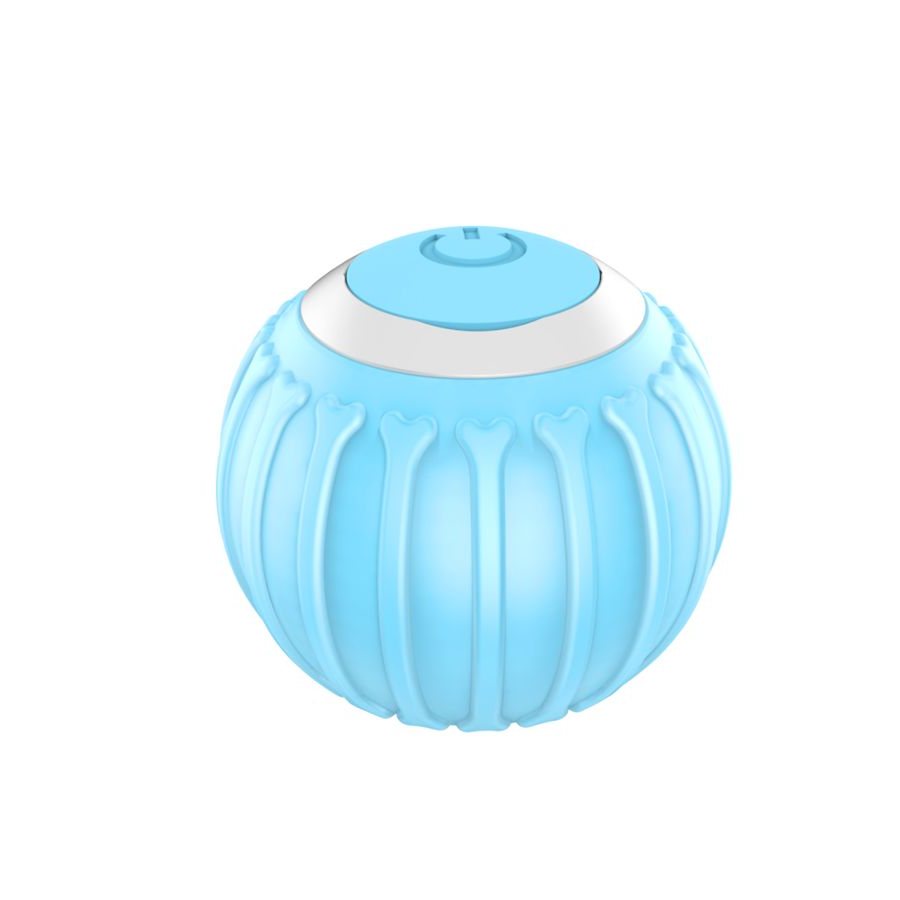
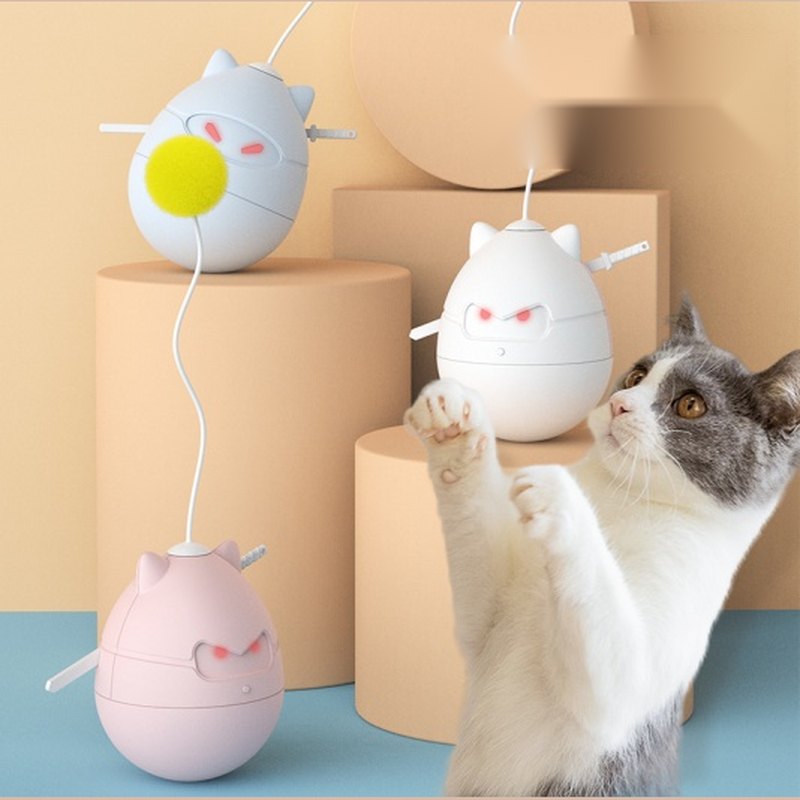
Some cats love a toy that runs away. A self-rolling ball such as our Roll Ball or the small Mini Smart Ball, which wakes up when touched, can keep a cat busy while you work nearby. A Wobble Teaser rocks back upright every time it is batted. Watch the first sessions, put the toy away afterwards so it stays exciting, and do not use any toy as a replacement for playing together.
11. Teach a trick
Cats can learn with small treats and short sessions: sit, high five, come when called, or go to a mat. One or two minutes at a time is plenty. Training is exercise for the brain and a good way to bond with a shy cat.
12. New smells
Catnip or silvervine on a toy can liven up play, although not every cat reacts to them. A cardboard box from the shop, a pine cone or a sock you wore on a walk gives your cat new smells to investigate.
Safety basics
- Put wand toys, ribbons and string away after play. Swallowed string can cause serious injury.
- Check toys for loose parts, feathers or bells that could come off and be swallowed.
- If you use a laser pointer, never shine it in your cat's eyes, and end the game with a real toy your cat can catch.
- For battery toys, check that the battery cover is closed and the toy is not damaged.
When boredom is not the cause
Talk to your vet if your cat suddenly plays much less, grooms one area until the fur is thin, stops using the litter box or seems restless and cannot settle. These can be signs of pain, stress or illness, not only boredom.